Aluminum Craft Wire Guide: Gauges, Anodized Colors, and When Copper Is Better
Published
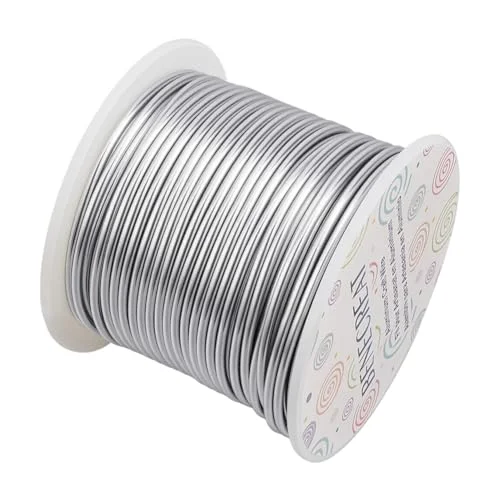
Aluminum craft wire is the light, soft, never-tarnishing frame metal: 10 to 12 gauge for armatures and bangles, 16 to 20 for wreaths, frames, and chokers, 22 for wire trees and floral stems. Choose copper instead when a piece must hold a fine wrap, take daily wear, or be soldered.
Search for aluminum craft wire and you get shelves: spool grids with a sentence of copy. What nobody explains is why this wire behaves the way it does, which gauge fits which project, what “anodized” actually means for the color you paid for, and the two caveats that surprise every first-time user. That is this guide.
What Makes Aluminum Different From Every Other Craft Wire
Three numbers explain aluminum’s personality. It weighs 2.7 grams per cubic centimeter against copper’s 8.9, so at the same gauge a foot of aluminum weighs about a third of a foot of copper, which is why a 100-foot spool feels almost empty in the hand and why big sculptures are built from it. Its stiffness is roughly half of copper’s, so it bends by hand at gauges where copper needs tools, and holds that bend well enough for frames. And it protects itself: aluminum grows an oxide film a few nanometers thick the moment it meets air, which is why it never tarnishes the way copper browns or silver blackens.
Those same numbers set the limits. Softer means aluminum needs to be one or two gauges heavier than copper to hold the same shape, and it does not work-harden into the springy, durable wire that jewelry-grade copper becomes. Bend it, unbend it, and bend it again in the same spot and it snaps, where copper would merely stiffen.
Aluminum Wire Gauge Chart by Project
Gauge numbers fall as wire gets thicker; our jewelry wire gauge chart has the full conversion. For aluminum specifically, the project decides the gauge:
| Gauge (AWG) | mm | Aluminum is right for | BENECREAT wire |
|---|---|---|---|
| 6 to 8 | 4.1 to 3.3 | Armatures for figures 2 feet tall, heavy bonsai branches | |
| 10 | 2.6 (sold as 2.5) | Armatures to about 18 inches, sturdy bangles, sculpture bases, wreath frames | 10-gauge aluminum, 80 feet |
| 12 | 2.05 (sold as 2 mm) | Figures to about 15 inches, cuffs and bangles, wire-tree trunk cores, sculpted rings | 12-gauge silver anodized, 100 feet |
| 14 to 16 | 1.6 to 1.3 | Figures to 12 inches, stiff floral stems, statement necklaces, choker frames | |
| 17 to 18 | 1.15 to 1.0 | Frames that hold a set shape, chokers, jump rings, cuffs, beading base wire | 17- and 18-gauge variants, 18-gauge gradient color, 307 feet |
| 20 | 0.81 | Charm bracelets, wrapped pendants, the thinnest aluminum most jewelers use | 20-gauge variant of the silver anodized family |
| 22 to 24 | 0.64 to 0.51 | Wire-tree strands, flexible floral binding, dangles; switch to copper for fine wraps |
Two project notes hide in that table. Wire trees are built from many thin strands, not one thick wire: nine to twelve strands of 22 to 24 gauge, each cut to about two and a half times the finished height, twisted into a trunk and splayed into branches, with a 12-gauge core only if the tree is large. And bonsai has its own rule: copper wire at about a third of the branch diameter, aluminum at a third to a half, because aluminum needs the extra thickness to hold the branch.
What “Anodized” Means for the Color You Paid For
Colored aluminum wire is not painted. Anodizing is an electrochemical process: the wire is made the positive electrode in an acid bath, which grows its natural oxide layer from a few nanometers to several microns and leaves it full of microscopic pores. Dye soaks into those pores, and a final bath in near-boiling water swells the oxide shut and seals the color inside. The result is a colored layer that is part of the metal’s surface, harder than the aluminum beneath it, and immune to tarnish.
It is not immune to tools. The layer is thin, it does not make the wire any stronger, and steel plier jaws scratch and chip it, exposing a silver line that cannot be re-dyed at home. Three habits protect it: use nylon-jaw pliers or wrap steel jaws in tape, make each bend in one firm movement instead of worrying at it, and keep a lint-free cloth between wire and fingers on show pieces. Organic dyes also fade under years of direct sun, so a window display is a slow bleach. Some brands color aluminum with an enamel coat instead of anodizing; the handling rules are the same, and the chip shows the same silver.
Our gradient-color 18-gauge runs teal through blue, gold, red, and green along a single 307-foot spool, which is the anodizing process doing something paint cannot: the color changes are in the surface, so the wire still bends and coils like plain aluminum.
The Two Caveats Nobody Puts on the Spool
Grey marks. Bare aluminum sheds a soft, dark oxide, sometimes mixed with lubricant left from drawing the wire, and it smudges onto hands and white cloth. It is harmless and washes off, but it surprises people. Anodized wire has that oxide sealed and dyed, so colored wire marks far less; with bare armature wire, wipe the length with a cloth before you start and expect a little grey on your fingers regardless.
No solder. Jewelry solder does not bond to aluminum. Joining it requires a dedicated aluminum solder and fluoride flux or welding, neither of which belongs on a craft bench, and any torch heat destroys the anodized color anyway. Aluminum work is cold-connected: loops, coils, wraps, and twists. If a design needs a soldered joint, that part is a copper part.
A smaller third caveat: do not tumble anodized aluminum with steel shot. It polishes the color straight off. A nylon or rawhide mallet on a steel bench block stiffens a frame without marking it.
Aluminum vs Copper: An Honest Comparison
| Aluminum | Copper | |
|---|---|---|
| Cost | A fraction of copper’s price per pound | The pricier craft metal |
| Weight at equal gauge | About a third | Heavy; noticeable on large pieces |
| Holding a shape | Softer; go one or two gauges heavier | Stiffer; work-hardens into durable wire |
| Re-bending | Snaps if you unbend and rebend | Tolerates adjustment, then stiffens |
| Tarnish | None; dulls slightly over years | Browns, then greens; can mark skin green |
| Skin | Harmless grey smudge from bare wire | Harmless green mark from bare wire |
| Color range | Dozens of anodized or enameled colors | Natural copper, patinas, or enamel coats |
| Solder and torch | No | Yes, on bare copper |
| Fine work under 22 gauge | Poor | Excellent |
The decision is rarely either-or. Most experienced makers run both: an aluminum frame for weight and color, copper in 26 to 28 gauge for the wraps and weaves that hold beads. Our copper jewelry wire range covers that second half.
How Much Aluminum Wire a Project Uses
Aluminum’s low weight means spools run long, so the arithmetic is forgiving. A bangle for an average wrist is about 8 to 9 inches of 12-gauge wire per loop, so a 100-foot spool is well over a hundred single bangles or thirty triple-wrap ones. A 12-inch figure armature takes roughly 4 to 6 feet of 16-gauge for the skeleton, more if you double the legs. A wire tree 6 inches tall uses ten to twelve strands cut to 15 inches, about 12 to 15 feet of 22-gauge, and a wreath frame is the frame’s circumference plus a few inches of overlap in 10- or 12-gauge. Buy the heavy gauges by the spool and the fine ones by the hundred feet, and you will run out of ideas before wire.
Which Aluminum Wire Should You Buy?
- Sculpture, armatures, bangles, and wreath frames: the 10-gauge at 2.5 mm in a bare-aluminum tone, or the 12-gauge at 2 mm in silver.
- Chokers, cuffs, jump rings, and beading frames: 17 or 18 gauge; the gradient 18-gauge gives five colors from one spool.
- Charm bracelets and wrapped pendants: 20 gauge, the finest aluminum most jewelers use before switching to copper.
- Wire trees and floral binding: 22 gauge in quantity; the strands do the work.
And one line for anyone who arrived here from a different question: “Is aluminum wiring still legal?” is about house wiring, not craft wire. Modern aluminum building wire is permitted with the right terminations; the notorious stock was solid branch wiring installed in the late 1960s and early 1970s. Craft wire carries no current, so it has nothing to do with any of it.
Sources
Anodizing chemistry and the aluminum oxide film are from Wikipedia’s Anodizing article; density figures from Wikipedia’s Aluminium and Copper entries; gauge diameters from the American Wire Gauge standard. Armature, wire-tree, floral, and bonsai gauge conventions reflect established craft and horticultural references; product specifications come from current BENECREAT listings.
Frequently Asked Questions
What is aluminum craft wire used for?
Anything that needs a light, shapeable frame: sculpture and doll armatures, wire trees, wreath and floral work, bonsai training, garden ties, holiday decor, and costume or statement jewelry such as bangles, chokers, and wrapped pendants. Because it is about a third the weight of copper and never tarnishes, it is the default wire for large decorative pieces. It is a poor choice for fine wraps under 22 gauge and for anything that must be soldered.
Is aluminum or copper wire better for crafts?
Aluminum wins on price, weight, and color: it costs a fraction of copper per pound, weighs a third as much per foot, and comes anodized in dozens of colors that never tarnish. Copper wins on strength and craft range: it holds a shape at one or two gauges thinner, work-hardens into durable jewelry, and can be soldered, hammered, and patinated. Rule of thumb: aluminum for frames, sculpture, and decor; copper for wearable jewelry and any piece that needs heat.
Does aluminum craft wire tarnish?
No. Aluminum grows a thin, invisible oxide film on contact with air that seals the surface, so it does not brown like copper or blacken like silver. Anodizing thickens that film and dyes it. What aluminum does do over years is dull slightly, and tumbling anodized wire with steel shot strips its color, so polish it with a cloth rather than a tumbler.
Why does aluminum wire leave grey marks on my hands?
Bare aluminum sheds a soft grey oxide, sometimes mixed with residue from the drawing lubricant, and it rubs onto skin and white fabric. It is harmless and washes off. Anodized wire has that oxide layer sealed and dyed, which is why colored aluminum marks far less than the bare metal, and why bare armature wire is best wiped with a cloth before you start.
What gauge aluminum wire is best for sculpture and armatures?
Match the gauge to the figure's height. Sixteen gauge (1.6 mm) armatures a figure up to about 12 inches, 12 gauge (2 mm) carries one up to about 15 inches, and 6 gauge handles figures of 2 feet. For wire trees, the trunk is a bundle of 22 to 24 gauge strands cut to two and a half times the finished height and twisted, with heavier wire only as a core. For bonsai training, the rule is aluminum wire at a third to a half of the branch diameter.
Can you make jewelry with aluminum wire?
Yes, with the right expectations. Aluminum makes excellent bangles, cuffs, chokers, statement pendants, and wrapped frames at 20 gauge and heavier, and its colors and low weight suit big pieces that would be heavy in copper. It is too soft for fine wraps and weaving, so most makers pair an aluminum frame with copper in 26 to 28 gauge for the detail, and it does not hold up like copper in a ring or bracelet that takes daily knocks.
Can you solder aluminum craft wire?
Not with jewelry solder. Silver and gold solders will not bond to aluminum, and joining it needs a dedicated aluminum solder with a fluoride flux or welding, neither of which suits craft wire; a torch also burns off the anodized color. Aluminum work is cold-formed by design: wrap, twist, and cold-connect it with loops and coils instead of joints.
Is aluminum wiring still legal?
That question is about electrical wiring, not craft wire, and the two share nothing but the metal. Modern AA-8000 series aluminum building wire is permitted under the US electrical code with aluminum-rated terminations and is standard for service entrance and feeder cables; the problem stock was the solid aluminum branch wiring installed roughly 1965 to 1973, which consumer safety data linked to a much higher fire-hazard rate at connections. Craft wire never carries current, so none of that applies to it.
The armature and bangle gauge
BENECREAT 12-gauge (2 mm) anodized aluminum wire, 100 feet of silver on a spool: soft enough to shape by hand, stiff enough to hold a frame, and it never tarnishes.
See the 12-gauge spool