Copper Wire for Jewelry Making: Bare, Plated, or Enamel-Colored, and How to Handle Tarnish
Published
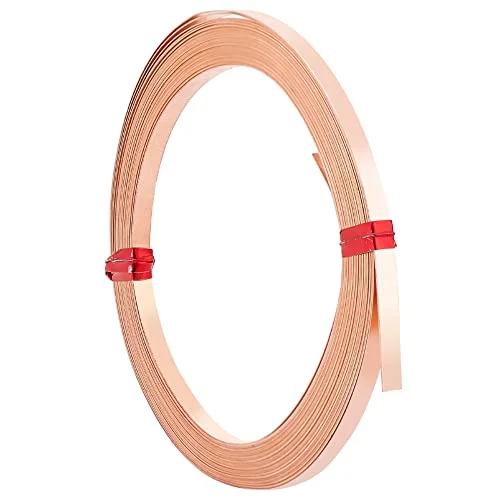
Copper is the standard practice and production wire for jewelry: buy it dead soft in 20 to 22 gauge for frames and wraps, choose bare copper if you plan to solder, hammer, or patina, and coated copper if you want the color to stay put. Tarnish is harmless and manageable.
Nearly every page that ranks for “copper wire for jewelry making” is a shelf: a grid of spools with no explanation. This one covers what jewelry copper actually is, which gauge and temper to buy, the real difference between bare, plated, and enamel-colored wire, whether hardware-store copper is fair game, what flat and bezel strips are for, and what genuinely keeps copper bright.
Which Copper Is Jewelry Copper?
There is no special jewelers’ copper. Suppliers sell alloy 110, also called electrolytic tough pitch copper, which is a minimum of 99.9 percent copper with a trace of oxygen. What makes it jewelry wire is how it is finished: drawn to a stated gauge, in a stated shape (round, square, half-round, or flat), and sold at a stated temper.
Temper has a numbering system that most craft wire never mentions: dead soft is #0, quarter hard #1, half hard #2, and the scale climbs to spring hard at #8 and above. Craft-store wire that does not name a temper is almost always dead soft. That matters, because temper is the difference between wire that coils under your fingers and wire that fights every bend.
Bare, Plated, or Enamel-Colored: Three Different Wires
Three products share the name “copper wire” and behave completely differently once you pick up a torch or a polishing cloth.
| Type | What it is | Solder, torch, patina? | How the finish ages | BENECREAT wire |
|---|---|---|---|---|
| Bare copper | Uncoated copper, usually dead soft | Yes to all three | Tarnishes to brown, then green if worn; polishes back indefinitely | 32-gauge flat, 3 mm wide, 26-gauge flat, 1 mm wide |
| Enamel-colored copper | Copper core under a permanent colored enamel and a clear anti-tarnish coat | No; heat destroys the coating, patina cannot reach the metal | Holds its color as long as the coating is intact; chips under bare steel pliers and cannot be repaired | 22-gauge light gold |
| Gold-plated copper | Copper core with a thin electroplated layer of gold | No | Wears through at friction points over time; keep it off rings | 20-gauge gold-plated |
Two labels deserve translation. “Light gold” on an enamel-colored wire is a color, not a metal; the spool contains no gold. And “tarnish resistant” means a coating stands between air and copper; it is not a property of the copper itself, which is why the coating is the thing to protect.
For the gauge side of the decision, our jewelry wire gauge chart converts every size to millimeters and lists the jobs each one handles.
Which Gauge of Copper for Which Job
Supplier technique charts agree on broad bands, and copper follows them exactly:
| Technique | Gauge range | The sweet spot |
|---|---|---|
| Frames, bails, bangles | 14 to 20 | 18 to 20 for pendants, 14 to 16 for cuffs |
| Wire wrapping stones | 14 to 26 | 20 for the frame, 24 for the wraps |
| Jump rings | 14 to 24 | 18 most popular, 20 for delicate chain |
| Earwires and head pins | 20 to 26 | 20 for earwires, 22 to 24 for head pins |
| Coiling and weaving | 22 to 30 | 26 for coils, 28 for weaves |
Brass is the odd one out. Our 12-gauge bare brass makes cuffs and heavy frames at 2 mm, but brass is harder and springier than copper at the same gauge, discolors under a torch, and oxidizes when unplated, so treat it as a structural metal rather than a wrapping one.
Dead Soft or Half Hard in Copper
Dead soft copper bends by hand, will not hold a sharp angle, and is the right buy for weaving, coiling, spirals, and wrapping around a base. Half hard forms crisp angles and keeps them, which is why it is the traditional choice for jump rings, earwires, and clasps. Full hard is stiff and can crack if bent repeatedly; it is frame and clasp wire.
The useful fact is that copper moves along that scale on its own. Every bend hardens it. Twisting dead-soft wire brings it close to half hard; pulling it through nylon-jaw pliers, tapping it on a steel block with a rawhide mallet, or tumbling it with steel shot all stiffen it further, and heating it to a dull red glow and cooling it softens it back to dead soft. Overdo the hardening and the wire turns brittle and snaps at the loops, which is the failure behind most “my wire broke” stories. Buy dead soft, and let the work do the hardening.
Hardware-Store Copper: Fine, With Three Chores
Electrical copper is held to high purity because impurities hurt conductivity, so the metal itself is as good as anything a jewelry supplier sells, and it is uncoated, which makes it ideal for torch work and heat patina. Three things stand between it and your bench.
- Strip it. The plastic insulation comes off, and multi-strand cable has to be separated into single wires.
- Anneal it. Electrical wire is drawn harder than dead soft; heat it to a dull red and let it cool to soften it, then pickle off the fire scale.
- Accept the limits. Hardware stores stock a few round gauges and no square, half-round, or flat wire.
If you have a torch, salvaged copper is a real resource. If you work cold, a spool of dead-soft craft copper skips all three chores.
Why Copper Tarnishes and Turns Skin Green
Copper’s surface reacts with oxygen to form copper oxide, which darkens it, and with sulfur compounds in the air to form sulfides and sulfates. Sweat adds salts and acids, and the result is a thin blue-green layer of copper carbonate and related salts, the same chemistry as the verdigris on a bronze statue. Because the layer is thin, it brushes off onto skin as a green mark. It is harmless and fades in a few days, and it is the reason bare copper rings mark fingers faster than pendants: rings sit in sweat and rub.
Skin chemistry varies, so two people wearing the same bangle get different results. Lotions, perfume, and chlorine speed the reaction, which is where the old rule comes from: copper jewelry goes on last and comes off first.
Keeping Copper Bright: What Actually Works
Nothing stops copper tarnishing permanently; every method below slows it, and the honest question is how often you are willing to renew it.
| Method | What it does | Renew | Trade-off |
|---|---|---|---|
| Polishing cloth | Removes fresh tarnish in seconds | Every wear | Does nothing to prevent the next tarnish |
| Microcrystalline wax | Nearly invisible film; two or three thin coats, half an hour apart | Once or twice a year with regular wear | Handle with cotton gloves while applying; fingerprints tarnish under the film |
| Clear jewelry lacquer | Hard clear coat in several thin layers | When edges wear through | Dislikes hairspray, lotion, and hot water; needs ventilation to apply |
| Anti-tarnish strips | Absorb the sulfur pollutants that darken copper inside a closed box or bag | About every six months | Do not remove existing tarnish |
| Zip bags and airtight boxes | Cut air and humidity exposure between wears | Ongoing | Keep pieces away from rubber and non-archival paper, which release sulfur |
| Factory enamel or plating | Permanent barrier applied at the mill | Never, and never repairable | Blocks soldering, torching, and patina; chips under steel pliers |
The practical stack for a bare-copper piece is wax plus a bag plus a cloth. The practical answer for someone who wants no maintenance at all is to buy the enamel-colored wire in the first place and use nylon-jaw pliers so the coating survives the build.
Flat Copper Wire and Bezel Strips
Round wire meets a stone along a line; a flat strip meets it along a band. That geometry is why stone-setting bezels are cut from flat strip, and why flat wire wraps and binds more securely than round wire of the same thickness. Bezel strip is conventionally 26 to 32 gauge thick, often about an eighth of an inch (3 mm) wide, and its height is the whole game: the wall has to stand a millimeter or two above the point where the stone curves inward, so it can be pushed over the stone and hold it. Too short and the stone falls out; too tall and the wall wrinkles as you fold it.
Our 3 mm flat copper is 32 gauge (0.2 mm) thick and unplated, which puts it in bezel-strip territory: the right thickness to fold over a stone, the classic width, and bare copper so a seam can be soldered. It is the strip to practice bezels on before cutting fine silver, and to wrap stones with when a copper look is the design. The 1 mm flat copper, at 26 gauge (0.4 mm) thick, is a different tool: too narrow to stand as a bezel wall, and exactly right as a flat binding wire, a decorative band over a wrapped frame, or a strip to stamp letters into. Both roll out at 19.7 feet, which sounds short until you remember a bezel uses the stone’s circumference plus a few millimeters.
Bezel work is a step past the basics; our wire wrapping for beginners guide covers the cold-formed skills that come first.
A Patina, on Purpose
Sometimes the goal is the opposite of shine. Liver of sulfur darkens bare copper to browns and blacks, with blues and purples on the way, and it only works on uncoated metal. Dissolve a small amount in warm water in a dedicated container, dip the clean piece for a few seconds to a minute, rinse, and repeat until the color is where you want it; long soaks build a patina that flakes off. Ventilate the room, do not lean over the bath, and neutralize the solution before disposal. Then brush the high points bright with steel wool and seal with wax, knowing the sealant will shift the colors slightly toward bronze.
Sources
The chemistry of copper tarnish and green skin is from the Royal Society of Chemistry’s Education in Chemistry. The alloy and hardware-wire discussion draws on the jewelers’ community at Ganoksin. Temper, technique-gauge ranges, bezel conventions, and tarnish-prevention intervals reflect the consensus of established jewelry-supplier references; product specifications come from current BENECREAT listings.
Frequently Asked Questions
What gauge copper wire is best for jewelry making?
It depends on the job, but two sizes cover most work: 20 gauge (0.8 mm) for frames, earwires, and jump rings, and 22 gauge (0.6 mm) for wrapping beads and making wrapped loops. Supplier technique charts run wider: wire wrapping 14 to 26 gauge, jump rings 14 to 24, head pins 20 to 26, coiling 22 to 30, and weaving 26 to 30. Remember that the gauge number falls as the wire gets thicker, so 18 gauge (1 mm) is twice the diameter of 24 gauge (0.5 mm).
What type of copper is used for jewelry making?
Jewelry suppliers sell alloy 110, also called electrolytic tough pitch copper, which is at least 99.9 percent copper, drawn round, square, half-round, or flat and sold in a stated temper, usually dead soft or half hard. There is no special jewelers' copper; what changes between products is the temper, the shape, and whether the wire is bare or coated. Coated craft wire is a copper core under enamel color, plating, or a clear anti-tarnish layer.
Can I use copper wire to make jewelry?
Yes. Copper is the standard practice metal and, for many makers, the production metal: it bends like sterling, costs a fraction as much, and bare copper can be annealed, soldered, hammered, and re-polished indefinitely. The trade-offs are that it tarnishes quickly and that sweat can leave a harmless green mark on skin. Coated copper avoids both but cannot be soldered, torched, or patinated, and a chipped coating cannot be restored.
Where can I get copper wire for jewelry making?
Three channels. Jewelry and craft suppliers sell copper with a stated alloy, temper, and shape, in long coils that work out cheap per foot; that is the easy route. Craft stores mostly stock coated tarnish-resistant or colored copper craft wire, usually dead soft and usually unlabeled for temper. Hardware stores sell electrical copper, which is very pure but insulated, limited to a few gauges, and harder than dead soft, so it needs stripping and annealing before it behaves like jewelry wire.
Does copper wire turn your skin green?
Bare copper can. Sweat, skin acids, lotions, and chlorine react with the surface to form a thin layer of copper salts, chlorides, sulfates, and carbonates, that brushes off green onto skin. It is not dangerous and fades within days. A barrier stops it: enamel-colored or plated copper wire, a coat of microcrystalline wax, or a clear jewelry lacquer, all of which wear off in time and need renewing. Put copper jewelry on last and take it off first to keep lotions and perfume away from it.
How do you keep copper jewelry from tarnishing?
You slow it; nothing stops it for good. A polishing cloth restores bare copper in seconds and is the simplest habit. Microcrystalline wax, applied in two or three thin coats and renewed once or twice a year, leaves an almost invisible film. Clear jewelry lacquer lasts longer but wears at the edges and dislikes hairspray and hot water. Between wears, store pieces in a zip bag or airtight box with an anti-tarnish strip, which absorbs the sulfur pollutants that darken copper, and replace the strip every six months.
What is the difference between gold-plated, gold-filled, and gold-colored wire?
Gold-filled wire carries a layer of karat gold that is at least five percent of the wire's weight, bonded with heat and pressure, and lasts for years. Gold-plated wire carries a microscopically thin electroplated layer, often under a twentieth of a percent of the weight, which wears through at friction points such as rings. Gold-colored or light gold craft wire contains no gold at all: it is copper under a colored enamel coating, chosen for the look and the price rather than the metal.
Can you solder or patina tarnish-resistant copper wire?
No. The tarnish-resistant finish is a coating over the copper, and a torch burns it off, solder will not bond through it, and liver of sulfur cannot reach the metal to darken it. If a project needs soldering, a heat patina, or a chemical patina, buy bare copper. Keep the coated wire for cold-formed work, where its finish is exactly the point.
Bare copper in the bezel width
BENECREAT flat pure copper wire, 3 mm wide and 32 gauge (0.2 mm) thick, 19.7 feet per roll: unplated copper you can wrap, fold, solder, and patina, in the width bezel strips are cut to.
See the 3 mm flat copper