Jewelry Making Tools for Beginners: The 8 You Need and the 5 You Can Skip
By BENECREAT Craft Team · Published · Updated
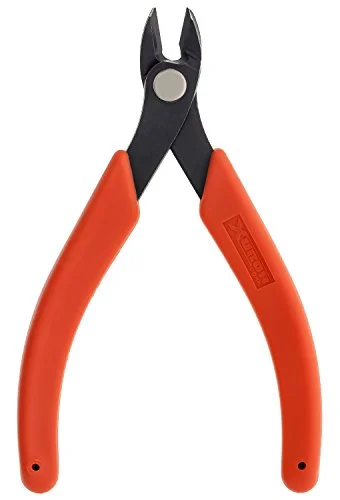
Start with three tools: a Xuron 2175 flush cutter, chain-nose pliers with smooth jaws, and round-nose pliers. Add nylon-jaw pliers when your wire kinks, a crimping tool when you string beads, and a bench block and mallet when you make rings. Skip the mega-kit and buy three good tools instead.
That advice is not ours; it is the market’s. We read 31 Reddit threads from r/jewelrymaking, r/Beading, r/WireWrapping, r/jewelers, and r/SilverSmith in which beginners asked what to buy, counted which tools and brands working makers named, and checked the answers against the tool guides at Halstead, Fire Mountain Gems, and Rings & Things and the makers’ own spec pages. BENECREAT does not make core pliers or cutters; the two BENECREAT tools that appear here, nylon-jaw pliers and bail-making pliers, sit exactly where the threads put them. No brand paid for placement.
The Eight Tools at a Glance
| Tool | Consensus pick | Budget option | Why it is on the list |
|---|---|---|---|
| Flush cutter | Xuron 2175 Maxi-Shear | Beadsmith Vintaj semi-flush | Named in 21 of 31 threads; the one tool makers say to spend on |
| Chain-nose pliers, two pairs | The Beadsmith 4.5 in | Billbotk | Grips, bends, and opens jump rings; smooth jaws are the whole spec |
| Round-nose pliers | The Beadsmith 6 in | SPEEDWOX tapered | Every loop starts here; named in 19 threads |
| Flat-nose pliers | Beadalon Designer Series, box joint | SPEEDWOX duck bill | Sharp bends, straightening, pressing wraps flat |
| Nylon-jaw pliers | LEONTOOL with 6 spare tips | BENECREAT double nylon jaw | Straightens kinked wire and stiffens soft wire without marks |
| Crimping pliers, beaders only | Beadalon Standard crimper | The Beadsmith crimper | A folded crimp holds; a flattened one is “half complete” |
| Bench block and mallet | The Beadsmith steel block + JTS rawhide mallet | HimaPro 4 in block | Work-hardens frames and forms rings without marks |
| Bead mat and bead board, beaders only | The Beadsmith mats + bead board | Beads stay put; patterns get planned |
What Makers Actually Agree On
The thirty-one threads say the same few things in different words.
- Three tools cover a beginner. “Three tools plus wire covers a beginner: round nose, chain nose with smooth jaws, and a flush cutter.” “I made it through my first 5 years wrapping with flush cutters, round nose pliers, and needle nose pliers. Start with those, they’re the big 3.” Across the corpus, cutters were named in 21 threads, round-nose in 19, chain-nose in 14, needle-nose in 15, flat-nose in 13. Nylon-jaw pliers (9 threads) and stepped or bail-making pliers (5) are the consistent second wave in wire-wrapping threads. A bead reamer was named as essential in zero threads.
- Smooth jaws, or nothing. Six makers in five threads warned against serrated jaws unprompted: “don’t use pliers that have serration on them as these will mark the metal.” Halstead’s guide says the same. It is the one specification that matters more than the brand.
- The flush cutter is the tool worth paying for. “The ONE specialized tool I would recommend getting is a flush cutter. I struggled for a very long time with standard wire cutters.” “Most budget kits ship a non-flush cutter, which leaves a tiny pyramid-shaped point on every cut end.” “If you upgrade one thing, make it a flush cutter.”
- Two pairs for jump rings. “Just remember you need 2 either chain nose or bent nose pliers for jump rings.” Halstead: “With two pairs of pliers, you can easily twist jump rings apart and closed again.”
- Buy one at a time, not a kit. “Better to buy the tools one at a time as you can afford them.” “Ready made kits will have all kinds of things she doesn’t need and are usually comprised of inferior brands.” “I bought a kit of pliers but at this point I’m only using like 2 from the set of 10.”
- Brands, by count. The Beadsmith was named in 17 comments across 8 threads as “the sensible middle ground most people land on.” Xuron, 14 comments in 8 threads: “for cutters Xuron is the name that comes up again and again.” Lindstrom, 13 in 6, split between loyal owners of old Swiss-made pairs and people who say the redesigned line is worse. Tronex, 12 in 4: “the best on the market now.” The electronics brands often recommended elsewhere, Hakko and Knipex, were mentioned zero times in the jewelry subs.
Which Beginner Are You?
Every top-ranking “beginner tools” page mixes torches into the list, which is how a beader ends up pricing a flex shaft. There are three different first benches, and the list depends on which one you are building.
| You want to make | Day-one tools | Second wave |
|---|---|---|
| Strung bead necklaces and bracelets | Flush cutter, two chain-nose, crimping pliers, bead mat | Bead board, round-nose for earrings, bead stoppers |
| Wire-wrapped pendants and earrings | Flush cutter, chain-nose, round-nose, flat-nose | Nylon-jaw, bail-making pliers, bench block and mallet, files |
| Rings and soldered metalwork | Bench pin, jeweler’s saw, files, sandpaper | Torch, ring mandrel, chasing hammer |
This guide covers the first two. If you mean the third, a silversmith on r/SilverSmith summed the entry list up as a bench pin, a saw, blades, sandpaper, and a marker, and our wire wrapping guide covers the wire path in detail.
The Eight Tools, in Detail
1. Flush cutter: Xuron 2175 Maxi-Shear
Ordinary wire cutters pinch; a flush cutter shears, leaving one end flat and smooth so it can sit against skin without filing. The Xuron 2175 Maxi-Shear is the model makers name most: rated for soft wire up to 12 gauge (2 mm), 148 mm long, made in the USA, with Xuron’s bypass blade that the company says cuts with about half the effort of a conventional cutter. It is the cutter that the highest-scored r/jewelrymaking thread in our corpus was started to praise, and the one a UK jewelry school lists as its flush cutter.

Two rules keep it sharp. Capacity ratings are for soft copper; Tronex, a competitor, explains that the tips of any precision cutter handle roughly four gauges less than the throat rating, so cut heavy wire deep in the jaws. And never cut memory wire, steel, or hard wire with it: “You will ruin your cutters trying to cut memory wire,” as one maker put it, and Xuron sells a separate hard-wire cutter for that job.
The alternatives, by budget. If you mostly string beads, the smaller Xuron 410, rated to 18 gauge, is the cutter Xuron itself pitches for bead stringing. The Beadsmith Vintaj semi-flush cutter and the Beadalon Designer Series semi-flush are the budget cutters makers accept; semi-flush leaves a slightly larger point than full flush. At the top, the Tronex 5222, flush cut, 117 mm, made in the USA, rated 38 to 19 gauge, is the cutter several long-time makers say they have never bettered. Buy it when you know you will stay.
2. Chain-nose pliers, two pairs: The Beadsmith
Chain-nose pliers are flat inside and rounded outside, and they do most of the work at a bench: gripping headpins, making right-angle bends, tucking wire ends, and, in pairs, opening and closing jump rings. The Beadsmith’s 4.5-inch chain-nose is the pair to buy twice: smooth jaws, fine tips, and a brand one maker has used “at almost a decade” on stainless wire.

The spec that matters is the jaw surface. Hardware-store needle-nose pliers have teeth, and teeth leave marks in soft metal that no polishing removes. If a listing does not say smooth jaws, assume it is not.
Upgrades and budget. The Xuron 487 chisel-nose is the same brand’s fine-tipped grip plier; the Lindstrom RX7890 snipe nose has a 0.8 mm tip for the smallest work, and with any Lindstrom on Amazon check that the seller is the brand or an authorized dealer, since makers report third-party listings; Wubbers chain-nose have the longer handles makers with big hands prefer, and the company guarantees them for life. At the budget end the Billbotk chain-nose has smooth jaws and costs less than a spool of wire, which is all a second pair for jump rings needs to be.
3. Round-nose pliers: The Beadsmith 6-inch
Every simple loop, wrapped loop, and spiral starts on a round-nose plier’s conical jaws, where the position along the taper sets the loop size. The Beadsmith’s round-nose is the mid-range default, and the brand’s round-nose is one of the tools makers single out as decent even when they skip the rest of a set.

One honest caveat from the threads: the top-voted answer in a “do I need round-nose” thread said no, not on day one, since “you can just use a nail” as a mandrel. That is true, and round-nose pliers are still cheap enough that most makers buy them with the first two tools. What they do badly is grip: Halstead warns not to squeeze with them, because the rounded jaws dent metal. Finish loops with the chain-nose.
Upgrades and budget. Xuron’s 488 round-nose matches the cutter above; Lindstrom’s RX7590 has a 1.4 mm tip and 20 mm jaws for very fine loops, and it is the one Lindstrom tool even the brand’s critics on the threads still praise. The SPEEDWOX tapered round-nose is the budget pair.
4. Flat-nose pliers: Beadalon Designer Series
Flat-nose jaws are flat inside and out, usually 3 to 5 mm wide, for sharp bends, straightening, and pressing a wrap flat against a frame. The Beadalon Designer Series flat-nose has the construction detail experienced makers told beginners to look for: a box joint rather than a lap joint. “Buy pliers with box joints, not lap joints, as they are superior and will likely last a lifetime unless truly abused.”

Some makers skip flat-nose entirely and use two chain-nose; others say a flat pair is the one they reach for most. The Beadsmith flat-nose is the mid-range alternative, the SPEEDWOX duck bill the budget one. Parallel-action pliers, whose jaws stay parallel as they close, were the sleeper pick of the more experienced voices (“life-savers”); they are a second-wave buy, not a first.
5. Nylon-jaw pliers: LEONTOOL, with spare tips
Wire that has been handled goes stiff and wavy, and coated wire scratches under steel jaws. Nylon-jaw pliers fix both: pull a length through them to straighten and slightly work-harden it, and use them to grip plated or enameled wire without marks. “Highly recommend to get a nylon pair of pliers, if you have kinks in your wire, you can straighten it with these.” The LEONTOOL double nylon-jaw pliers come with six replacement tips, which matters because the tips wear and Halstead notes they need replacing now and then.

This is the one category where we sell a competing tool, so here is the honest comparison. BENECREAT’s double nylon-jaw flat-nose does the same job with adhesive-backed jaws; it costs about the same and ships without a bag of spares. Beadalon’s round-nose nylon-jaw is the pair for forming loops in coated wire. The vouiu nylon-jaw is the budget pair. Any of them beats the painter’s-tape trick, which is what makers use until they buy one.
6. Crimping pliers, if you string beads: Beadalon Standard
Beaders need one tool wire wrappers do not. A crimp tube on flexible beading wire is folded closed in two steps by crimping pliers; squashed flat with chain-nose pliers it is, in the words of a maker who repairs jewelry for a living, “the #1 reason people need help with things that fall apart.” The Beadalon Standard crimper closes size 1 and 2 crimp beads and size 2 tubes, which covers the everyday .015 to .024 inch wires; Beadalon’s own three-step technique is printed on the card. The Beadsmith crimping pliers, for 2 mm crimps and .013 to .024 wire, is the equivalent from the other mid-range brand.

If you already know you will use micro crimps on fine wire or size 4 tubes on heavy strands, Beadalon’s 4-piece crimping set covers all three sizes. Which crimp goes with which wire, and how to close each one, is a guide of its own; for the wire itself, our best stretch cord for bracelets guide covers the elastic side, and 7-, 19-, and 49-strand cable gets its own comparison.
7. Bench block and rawhide mallet: The Beadsmith block, JTS mallet
The first hammer to buy is not a hammer. A rawhide or nylon mallet stiffens a soft wire frame and forms a ring on a mandrel without leaving a mark, which is why the Metalsmith Society’s guide says that if you buy one hammer, buy this one. The JTS rawhide mallet is the maker-supply version; it needs something hard to strike against, and The Beadsmith steel bench block or the larger HimaPro 4-inch block is that surface. Put a rubber mat or a folded towel underneath to kill the ring.

A chasing hammer comes later, when you want to texture and flatten wire deliberately; a planishing hammer, one wrapper advised, can be left out entirely. Ring makers add a steel ring mandrel marked with sizes. Steel, not aluminum: the aluminum ones are “just for checking sizes,” and a maker who bought a coated craft-store mandrel watched “the top came apart from the handle.”
8. Bead mat and bead board, if you string beads: The Beadsmith
The beading side of the corpus is unanimous about one cheap thing: something for the beads to sit on. “These small triangle trays are the single most important things I use in beading. Use them along with a bead mat or any kind of material that has a small pile to it.” The Beadsmith’s beading mat set is that surface, and a flocked bead board with measured channels lets you lay out a necklace before stringing it, which one beginner thread called the tool that “helps a lot too for planning patterns.” A pack of bead stoppers keeps a strung strand from sliding off the wire while you work.
If your beads are already sorted into jars, our guide to organizing beads and gemstones covers the storage side.
Five Things You Can Skip for Now
Every mega-kit includes these, and the makers who answered the beginner threads said, in order of certainty, to leave them out.
- The caliper, tape measure, and jump-ring opener. “Who needs a tape measure, a caliper, or a jump ring opener? Additionally, those needle threaders break easily.” A ruler and a second pair of chain-nose pliers do both jobs.
- The bead reamer. Not named as essential by a single maker in 31 threads. Buy it the day a bead hole is too small, not before.
- The Dremel or flex shaft. “No, you can’t use a rotary tool for everything. A set of files is a much more essential tool than a flexshaft.” Halstead’s guide agrees that a flex shaft is not a starting tool. A few needle files and 400 to 1000 grit sandpaper do the finishing work for years.
- The planishing hammer and the jeweler’s saw, unless you are soldering. Both belong to the metalsmith list. Wire wrappers and beaders never need the first and rarely the second.
- The 1,500-piece kit. “The Amazon starter kits pad the item count with wire you will not use and pliers with serrated jaws.” Even the makers who defend cheap tools defend a cheap plier set, not a bin of beads with pliers in it.
Stepped or bail-making pliers are not on the skip list, but they are not day one either. They are the tool wire wrappers buy third or fourth, once they are making chains and bails and want every loop the same size: “I love my stepped pliers. I know the loops are always gonna be the same every time.” When that day comes, The Beadsmith One Step Looper makes a simple loop and trims it in one squeeze, and our own BENECREAT 6-in-1 bail-making pliers, with barrels from 3 to 10 mm, are the budget stepped pair. Check any stepped plier’s barrels are truly round before you rely on it; a maker’s Hobby Lobby pair had “a couple odd shaped steps.”
Kits: When a Set Makes Sense
The kit verdict has two halves. Mega-kits that bundle beads, findings, wire, and ten tools are the thing makers warn against, for the reasons above. A plier-only set from a named brand is fine, and for some beginners it is the right first buy: “A cheap set with a smooth round-nose, a chain-nose and a cutter is honestly fine to learn on. If you upgrade one thing, make it a flush cutter.”
The set that fits that advice is The Beadsmith Color-ID 3-piece: chain-nose, round-nose, and a side cutter, from the brand most makers start with. Its 5-piece version adds flat and bent-nose. The Beadsmith Fashion Color 8-piece was the set a Redditor asked about and was told is “absolutely awesome” for the price, with one warning about the brand’s zebra-pattern set, which makers say to avoid. Whatever set you buy, expect to replace the cutter with a real flush cutter within a few months; that is the pattern in nearly every thread.
Generic sets deserve a specific caution rather than a blanket no. The URSKYTOUS 4-piece and the Shynek 3-piece are the sets Amazon surfaces first, and they work to learn on if the jaws are smooth. The WORKPRO 3-pack is a good hardware set that makers found wrong for jewelry: “their jaws are sized for electrical and DIY work, so the tips are usually too thick for small loops and a lot of them are serrated.”
A First Shopping List, by Path
Stringing beads. Xuron 410 cutter, two Beadsmith chain-nose, Beadalon Standard crimper, bead mat. Add round-nose the first time you make earrings.
Wire wrapping. Xuron 2175 cutter, Beadsmith chain-nose, Beadsmith round-nose, Beadalon flat-nose, and a spool of 20 gauge dead soft copper to practice on; our best wire for jewelry making guide picks the spool. Add nylon-jaw pliers the first time a coil scratches, and the bench block and mallet the first time a frame will not hold its shape.
Rings from wire. Everything in the wire list plus the steel ring mandrel. Solder comes later, and with a different guide.
Wire, findings, and the two BENECREAT tools above live in our craft tools and jewelry wire ranges. Buy the rest when a project asks for it. “Take a course, and buy tools when you actually need them.”
Sources
- Reddit threads, 31 in total from r/jewelrymaking, r/Beading, r/WireWrapping, r/jewelry, r/jewelers, and r/SilverSmith, 2014 to 2026, including Jewelry Plier Brand Suggestions!, For beginners, what are some essential materials to start making jewelry?, Thinking of getting into beading. What supplies do I really need to start?, Guide for wirewrapping?, and Are these pliers worth getting?; tool and brand counts are from this corpus
- Halstead, A Guide to Jewelry Pliers, for plier definitions and the serrated-jaw warning
- Fire Mountain Gems, hand tool guide
- Rings & Things, jewelry pliers, for the 16-gauge working range of jewelry pliers
- Xuron, 2175 Maxi-Shear, 410 Micro-Shear, and the Micro-Shear blog post, for capacities and dimensions
- Tronex, Selecting a Cutter and the 5222 product page, for how capacity is rated and the hard-wire warning
- Lindstrom RX-series datasheet, for the RX 7590 tip and jaw dimensions
- Beadalon, crimp and tool match-up chart and crimping technique
- Wubbers, lifetime guarantee; Metalsmith Society, beginner tool guide, on the rawhide mallet
Reviewed by the BENECREAT Craft Team.
Frequently Asked Questions
What tools do I need to start making jewelry?
Three, according to nearly every maker who answers this question on Reddit: a flush cutter, chain-nose pliers with smooth jaws, and round-nose pliers. Across 31 threads we read, cutters were named in 21, round-nose in 19, and chain- or needle-nose in 14. Add a second pair of chain-nose for opening jump rings, then buy the rest as a project demands it: nylon-jaw pliers when wire kinks, a crimping tool when you string beads, a bench block and mallet when you make rings.
Do I really need a flush cutter?
It is the one tool makers tell each other to spend on. A flush cutter shears the wire flat on one side, so the cut end sits smooth against skin; ordinary side cutters leave a small pinched point on every end that has to be filed. Most budget kits ship the non-flush kind. Xuron is the brand that comes up most often, and its 2175 Maxi-Shear handles soft wire up to 12 gauge. Keep it away from memory wire and steel, which chip the blades.
Are jewelry pliers kits worth buying?
Mega-kits with beads, findings, and ten tools are not, and makers say so bluntly: they pad the count with tools you will never use, the pliers often have serrated jaws, and the cutter is rarely flush. A plier-only set from a named brand is a different matter. A three-piece set of chain-nose, round-nose, and cutter from The Beadsmith is the middle ground most people land on, and you can upgrade the cutter first.
What is the difference between chain-nose and needle-nose pliers?
Chain-nose pliers are flat inside and rounded outside, with short tapered jaws made for gripping small parts and making sharp bends. Needle-nose pliers are longer and finer, often with a tip of 1.5 mm or less, and hardware-store versions usually have serrated jaws. Either works for jewelry as long as the jaws are smooth; makers use the two names loosely and mean the same job.
Why do jewelry pliers need smooth jaws?
Serrated jaws bite into soft copper, silver, and plated wire and leave tooth marks that never come out. Six separate makers across the threads we read gave the same warning without being asked, and one who started with hardware-store pliers had to file and polish the teeth off. Every pick in this guide has smooth jaws; if you already own serrated pliers, wrap the jaws in painter's tape until you replace them.
Xuron, Lindstrom, or Tronex: which brand of jewelry tools is best?
For cutters, Xuron is the name that comes up again and again as the affordable upgrade, and its tools are made in the USA. Tronex is what several long-time makers call the best on the market now, at a professional price. Lindstrom was the traditional upgrade, but several owners say the newer redesigned line is not what their decades-old Swiss-made pairs were. The Beadsmith is the sensible middle ground for pliers, and Wubbers are guaranteed for life if you have large hands.
Do I need crimping pliers?
Only if you string beads on flexible beading wire, and then yes. Crimping pliers fold a crimp tube around the wire in two steps; flattening it with chain-nose pliers leaves a sharp, half-finished crimp that makers say is the most common reason a necklace falls apart. A standard crimper covers size 2 crimp tubes and the everyday .015 to .024 inch wires. Wire wrappers and metalsmiths can skip it entirely.
What tools do I need to make rings?
A steel ring mandrel marked with sizes, a rawhide or nylon mallet that forms metal without marking it, and a steel bench block to hammer on. Buy the mandrel in steel, not aluminum; makers report aluminum ones only good for checking sizes and cheap coated ones flaking. If you mean soldered rings, that is a different list that starts with a bench pin, a jeweler's saw, and files, and only later a torch.
The second-wave plier, for when your loops have to match
BENECREAT 6-in-1 bail-making pliers: six stepped barrels from 3 to 10 mm, so every bail, jump ring, and coil comes out the same size. Not a day-one tool, which is why it sits at the end of this guide, not the start.
See the bail-making pliers