Best Wire for Jewelry Making: 7 Honest Picks by Project
By BENECREAT Craft Team · Published · Updated
Start with dead soft bare copper in 20 gauge, the wire that maker forums recommend almost unanimously, and add a 26 to 28 gauge spool for wrapping and weaving. For color, ParaWire is the coated copper that wire wrappers name most; for strung necklaces use a 49-strand Beadalon cable, not solid wire; sterling comes later, and only from a supplier that sells it by temper.
That is the short answer, and it is not a description of our catalog. We ranked these seven wires against what working makers actually say: 46 Reddit threads with 561 comments from r/jewelrymaking, r/WireWrapping, and r/Beading, posted between 2021 and 2026, plus the wire guides published by Fire Mountain Gems, Rings & Things, and ParaWire. Where a competitor’s wire is the better answer, it is the pick, and it carries the same affiliate link ours does. Three of the seven picks are BENECREAT; four are not. No brand paid for placement.
The Seven Picks at a Glance
| Project | Pick | Why it wins | Watch out for |
|---|---|---|---|
| Learning, and most finished work | Craftwire USA 20 ga bare copper, 108 ft | Bare dead soft copper is the forum consensus starter; jewelry-supplier copper, not craft-store | Tarnishes and can mark skin green; arrives coiled |
| Colored wrapping and weaving | ParaWire 20 ga coated copper | Most-recommended coated wire in the threads, 53 mentions across 27 of them | Short spools on Amazon; full color range only at the maker’s own store |
| Earwires, jump rings, clasps | Beadalon German Style 20 ga, 78 ft | Medium temper holds a hook or ring without work-hardening first | Plated: crack-prone under heavy wrapping, never hammer it |
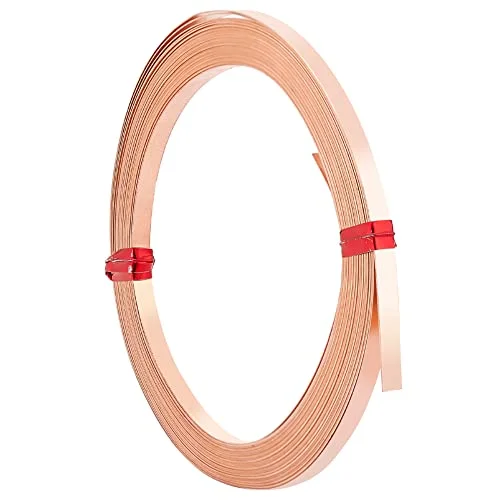
| Stone wrapping and bezels | BENECREAT 3 mm flat pure copper | Our flat strip is the BENECREAT wire makers praise by name | Unplated, will patina; short 19.7 ft roll |
| Sculpture and armatures | BENECREAT 12 ga anodized aluminum, 100 ft | The aluminum range a wire sculptor on the forums buys by default | Not for fine jewelry; color mars under steel jaws |
| Strung necklaces | Beadalon 49-strand cable, .018 in | 49 strands drape; 7-strand cable kinks | A cable, not a wrapping wire; kinks are permanent |
| Keepsakes and pieces for sale | Craft Wire 20 ga sterling, dead soft, made in USA | Precious metal sold by temper, the supplier-grade product forums send you to | Sold by the foot; tarnishes; buy only what the piece needs |
What Makers Actually Agree On
Before the picks, the consensus itself, because it is more useful than any single spool.
- Start on bare copper. Dead soft bare copper came up as beginner advice 27 separate times. It is cheap enough to waste, behaves close to fine silver, and work-hardens as you go. The standard first set is 18 to 20 gauge round for frames plus 24 to 28 gauge for wrapping and weaving.
- Brands, by the numbers. Counting only the 28 generic “what wire do you use” threads, ParaWire was named 29 times, Rio Grande 28, Beadalon 9, hardware-store or scrap copper 8, Artistic Wire 7, Craftwire USA 6, Fire Mountain Gems 4, Soft Flex 2, and BENECREAT 2. Rio Grande and Fire Mountain do not sell wire through Amazon, which is why two of the picks below are the Amazon-side equivalents: Craftwire USA for bare and precious metal, ParaWire for coated.
- Buy from suppliers, not from the cheapest listing. The most upvoted line on the subject was to stay off no-name marketplace wire and use jewelry suppliers. Wire sold as copper that turned out to be aluminum, and copper-colored steel that snapped, both came up. One budget brand was named specifically as the one to avoid.
- Plating wears through. The most emotional complaint in the corpus: plated gold and silver layers last a year at most against skin, often under six months, and weeks on a ring. Enamel-colored wire holds up better than plating, and gold-filled or solid metal is the only answer for daily wear.
- Dead soft for wrapping, half hard for structure. Dead soft was mentioned 28 times to half hard’s 22. Wrappers and weavers buy soft and harden the finished piece; the top-voted comment in a 29-reply thread simply said half hard is sufficient for most jobs, meaning the jump rings, hooks, and clasps that carry load.
- Sensitive ears want niobium or titanium. Ten mentions across the corpus. Plated copper through a fresh piercing is a bad idea from any brand.
Which Wire Material Should You Choose?
Material decides how the piece will look in a year, long after the day-one shine.
| Material | Color | Tarnish behavior | Working feel | Best for |
|---|---|---|---|---|
| Bare copper | warm rose | darkens with air and skin, polishes back | soft, close to fine silver | learning, patina looks, hammered pieces |
| Enamel-coated copper | gold, silver, colors | keeps color while the coating is intact | soft; use nylon-jaw tools | colored wrapping, links, chain maille |
| Plated copper | gold, silver | plating wears through at friction points | soft to medium | occasional-wear color; never rings |
| Anodized aluminum | silver and bright colors | no rust; color lives in the surface layer | very soft and light | sculpture, armatures, florals |
| Bare brass | pale gold | slow warm patina | springier than copper | frames, statement pieces |
| Stainless cable | steel grey | none in normal use | floppy by design | stringing beads |
| Sterling, gold-filled | precious | sterling tarnishes, polishes back | sold by temper | keepsakes, pieces for sale |
Two facts worth knowing before you pay precious-metal money. Sterling is 92.5 percent silver alloyed with copper, and it is the copper share that tarnishes. Gold-filled wire is not plated: a gold layer is mechanically bonded to the core, far thicker than any plating, which is why the FTC treats “gold-filled” as a regulated claim and why those pieces survive daily wear that kills plated wire. We do not stock either.
What Gauge Do You Actually Need?
Gauge runs backwards, so a bigger number means thinner wire. The working anchors, consistent across the supplier guides and the forums:
- 26 to 30 gauge: weaving, Viking knit, lashing beads to frames
- 22 to 24 gauge: wrapped loops and bead links, fits most stone beads
- 20 to 22 gauge: earwires and the all-round sweet spot
- 16 to 18 gauge: jump rings you cut yourself, clasps, frames
- 10 to 14 gauge: cuffs, chokers, rings, sculpted bases
For millimeter conversions and a per-gauge project map from 10 to 32, use our jewelry wire gauge chart; for the wrapping-specific pairings, the wire wrapping guide for beginners walks a first project end to end.
Dead Soft or Half Hard?
Wrappers and weavers mostly buy dead soft and stiffen the finished shape by hammering, tumbling, or just working the metal. Structure people buy half hard, or German-style medium temper, for jump rings, clasps, and hooks that must hold under stress. The asymmetry decides ties: soft wire can always be hardened, but softening half hard wire back means annealing it with a torch. When in doubt, buy soft. One expectation to set: nearly all colored craft wire, ParaWire and ours included, ships soft, and forum threads are full of people surprised by that when they expected structure. A colored earwire needs deliberate work-hardening before it goes in an ear.
The Picks, in Detail
1. Learning, and most finished work: Craftwire USA 20 gauge bare copper
The consensus starter is not a brand, it is a material: dead soft bare copper. The suppliers those threads name for it, Rio Grande and Fire Mountain Gems, sell only through their own stores, and the same threads warn against anonymous marketplace copper. That leaves a narrow middle, and Craftwire USA’s 20 gauge bare copper sits in it: alloy 110 copper, the standard jewelry grade, dead soft, 108 feet on a 5-ounce spool, from a supplier the forums list alongside Rio Grande and Fire Mountain. The same listing runs from 10 to 30 gauge, so the 26 or 28 gauge weaving spool can match. A one-pound spool of 315 feet is the production size.

Two alternatives are worth naming. Artistic Wire’s uncoated bare copper is the craft-store option, 15 yards to a spool, from a brand the threads praise for color-holding, though more than one maker reported a marketplace spool arriving harder and kinkier than dead soft should be. And if you would rather have six gauges at once than 108 feet of one, the BENECREAT 12-roll bare copper kit covers 18 through 28 gauge, two rolls each, 196 feet total; it is the set a top-voted beginner thread’s author had bought as their first wire. It is a sampler, not a production spool, and we say so.
The honest limits of bare copper are the honest limits of the metal: it tarnishes, it can leave a green mark on sweaty skin, and a 108-foot coil arrives coiled and wants a pass through nylon-jaw pliers before it behaves. Our copper wire guide covers the chemistry and the fixes.
2. Colored wrapping and weaving: ParaWire 20 gauge coated copper
If the corpus has a favorite brand, it is ParaWire: 53 mentions across 27 of the 46 threads, with makers reporting no tarnish after two years of use, a coating that chips less than the competition, and a color catalog in fine gauges that no general craft brand matches. The enamel-over-plating construction is the reason: the color is a coating, not a plating, so it survives wrapping that flakes plated wire. On Amazon the brand’s own listings are short, 6 to 10 yard spools in a handful of finishes in 20 gauge; the full range of colors and the pound spools live at the maker’s own store, and the threads treat ordering direct as normal.

The cons are real and specific. ParaWire ships dead soft, which surprises people who wanted it to hold a hook shape. A few makers described recent orders arriving with the wrong gauge or a tarnished surface, so check the spool on delivery. And 6 yards is a small spool for a frame gauge; buy the weaving gauges here and the frame wire in bare copper.
Two alternatives, in order. Artistic Wire’s 20 gauge in gold color, 79 feet to a spool, is Beadalon’s coated line and the one with the widest selection of colors and gauges on the shelf; makers say it keeps its colors very well, and some say it has grown softer than it used to be. And our own BENECREAT 20 gauge KC gold is the budget option: a real gold plating over copper under a tarnish-resistant top coat, 33 feet, in a line that runs down to 28 gauge so weaving wire can match. Being a plating rather than an enamel, it obeys the plating rule from the consensus above: fine for wrapped pendants and links, wrong for rings and bracelets that rub skin all day, and never hammered.
3. Earwires, jump rings, and clasps: Beadalon German Style 20 gauge
Structure wants temper, and German-style wire is the coated wire that ships with it. Beadalon’s German Style 20 gauge, 78 feet on the spool in silver plate, with a gold version of the same length, is a medium temper: an earwire hook or a jump ring holds its shape straight off the spool, without the hammering that dead soft wire needs first. Makers on the threads reach for it for exactly those components, and one noted it tarnishes less and polishes up more easily.
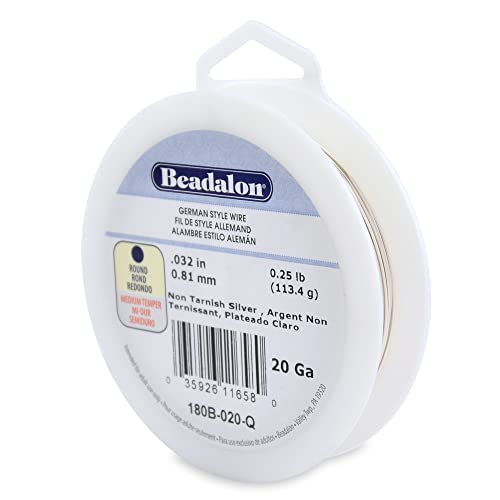
The limit is the one Rings & Things puts in its wire guide: German-style is a plating, and plating can crack and flake under heavy wrapping. Use it for hooks, rings, and simple loops, not for tight coils over a frame, and never hammer it.
For chain maille and beaded chain in quantity, where the budget matters more than temper, our 22 gauge light gold is the value pick: enamel-colored copper, 0.6 mm, 164 feet to a spool. Light gold here names the enamel color, not a gold content. It ships soft like the rest of the coated range, so rings and hooks made from it want a pass of work-hardening, and at 0.6 mm it is too thick for most pearls.
4. Stone wrapping and bezels: BENECREAT 3 mm flat pure copper
This is the BENECREAT wire that forum makers praise by name. Flat wire is the quiet cheat of stone wrapping: a strip meets the stone along a band instead of a line, so it grips curved faces with less pressure and no rolling. The 3 mm flat pure copper wire is a 0.2 mm thick unplated strip, and the 3 mm width is enough to stand above a cabochon’s curve, which puts it in bezel territory. One long-time user described it as great to work with, holding its shape well and not tarnishing; asked years later whether that was still true, they said it was. The narrower 1 mm flat strip is the companion binding and accent wire, not a bezel wall.

Being bare copper, both will patina with time and skin, and 19.7 feet is a short roll, though a bezel uses only the stone’s circumference plus a little. Polish it back, seal it, or treat the darkening as the finish.
5. Sculpture and armatures: BENECREAT 12 gauge anodized aluminum
At 2 mm thick, most metals fight back. Aluminum does not, which is why the 12 gauge anodized aluminum wire with 100 feet on the spool is the pick for wire sculpture, doll and figure armatures, florals, and wreath frames: hand-bendable structure that holds its shape and never rusts. When a wire sculptor on the threads was asked where they buy, the answer was our aluminum range, for the number of gauges and colors. A 10 gauge, 2.5 mm version covers heavier builds, and the 22 gauge spool of 918 feet is the cheapest honest currency for practice: drill the same wrap thirty times and the spool barely notices.

The same threads are equally clear about the limit, and we agree with them. Colored aluminum shows tool marks, fatigues where a joint is re-bent, can lose color at a splice, and cannot hold a clasp or earwire under daily load. It is sculpture and rehearsal wire; when a design graduates to a piece someone will wear, re-make it in copper. The aluminum-specific projects are in our aluminum craft wire guide.
6. Strung necklaces: Beadalon 49-strand beading cable
One pick in this list is deliberately not a wrapping wire. Strung necklaces and bracelets need a core that stays limp forever, and that is a cable. The rule from ParaWire’s own basics guide and from the beading forums is the strand count: 7-strand cable is stiff and kinks, 19 and 21 drape, and 49 drapes best while carrying the most load. Beadalon’s 49-strand .018 inch cable is the standard-diameter answer for 4 to 8 mm beads, finished with crimp beads rather than loops; Soft Flex’s 49-strand medium, 100 feet, is the other name the threads use, chosen for its softer hand. Stretch bracelets are a third material again, and our guide to the best stretch cord for bracelets compares those by diameter and breaking strength.

Our own 7-strand bead stringing wire, 240 feet of 0.38 mm nylon-coated stainless, is the budget and heavy-bead option: 7-strand is the stiffest construction, which suits a strand of large stones and does not suit a liquid-feel necklace. Any cable’s kink is permanent. Cut past it and re-crimp rather than trying to smooth it out.
7. Keepsakes and pieces for sale: sterling from a wire supplier
Precious metal is where the forums stop naming craft brands entirely and send you to jewelry suppliers that sell by temper and hallmark their stock. Rio Grande is the default name, and it does not sell through Amazon; the made-in-USA Craft Wire 20 gauge sterling, dead soft, sold in 5-foot lengths with a 1-ounce spool for production, is the equivalent on the platform. Buy the length the piece needs, in the temper the piece needs: dead soft for wrapping, half hard for the hook.

For sensitive ears, skip plated anything and buy finished niobium ear wires or titanium; that was the one hypoallergenic answer the threads gave, ten times over. We do not make sterling, gold-filled, niobium, or titanium wire, and a guide that pretended otherwise would not be worth reading.
Where BENECREAT Stands in This List
Three picks of seven, and each for a reason a maker gave, not one we gave ourselves: the flat copper strip, the aluminum range, and the bare copper sampler kit. Our coated copper is in the list as the budget alternative behind ParaWire and Artistic Wire, which is where the threads put it too: fine wire at a fair price, with the plating caveat stated. What we do not make is precious metal, hypoallergenic metal, and long spools of bare round copper in a single gauge, and for those the right answer is another supplier. We would rather you buy the right wire elsewhere than the wrong one from us.
How to Keep Coated Wire Looking New
Every colored wire in this guide, plated or enameled, obeys the same three rules. Grip with nylon-jaw pliers or wrap plier jaws in painter’s tape, because bare steel jaws are what scratch coatings, not wear. Do not hammer plated wire at all, and planish enameled wire only lightly, since heavy blows thin the color off the high spots. File cut ends and roll them inward so no raw copper edge sits against skin. Between sessions, spools live best in zip bags away from humidity; an anti-tarnish strip in the bead box is cheap insurance for the bare copper and sterling.
A First Shopping List
For a maker starting from nothing, this order covers a year of learning without a wasted spool:
- One spool of 20 gauge bare copper for frames, loops, and links, or the 12-roll kit if you want every gauge to try
- One 26 or 28 gauge spool for lashing and weaving, bare copper to match or ParaWire once you want color
- The 918-foot aluminum spool, for drills and mock-ups before committing the good wire
- Flush cutters, round-nose and nylon-jaw pliers, and a steel block with a nylon or rawhide mallet
- Add flat copper strip when a stone refuses to stay put, German Style wire when you start making your own earwires, and sterling when someone offers to pay
The gauge logic behind every row is in the gauge chart, and the beginner wrapping guide turns list items one, two, and four into a first pendant. The BENECREAT wires named above live in our jewelry wire and beading supplies ranges.
Sources
- Reddit wire threads, 46 in total from r/jewelrymaking, r/WireWrapping, and r/Beading, January 2021 to September 2026, including What kinds of wire do you all use? and What wire do you prefer?; brand counts and quoted opinions above come from this corpus
- Fire Mountain Gems, All About Jewelry-Making Wire, for technique-to-gauge ranges and the rule against hammering plated wire
- Rings & Things, Wire Jewelry 101, for German-style plating behavior and the per-gauge project map
- ParaWire, The Basics of Wire in Jewelry Making, for sterling and gold-filled composition and the beading-cable strand rule
- Beadalon, choosing the right craft wire, for the Artistic Wire range
- FTC Jewelry Guides, the US rules for “gold-filled”, “plated”, and related marking claims
- American wire gauge and Sterling silver on Wikipedia, for diameters and the 92.5 percent alloy
Reviewed by the BENECREAT Craft Team.
Frequently Asked Questions
What is the best wire for jewelry making for beginners?
Dead soft bare copper in 20 gauge, plus a 26 or 28 gauge spool for wrapping, is the near-universal recommendation on maker forums: across 46 Reddit threads we read, it was given as advice 27 separate times. Copper is cheap enough to waste, bends like fine silver, and work-hardens as you practice, so mistakes cost pennies instead of a sterling spool. Once your loops and coils come out consistent, move the same designs to coated copper for color, or to sterling for pieces you plan to sell.
Which brand of jewelry wire is best?
It depends on the wire type. For coated colored copper, wrappers name ParaWire most often, with Artistic Wire and Beadalon close behind. For bare copper and precious metal, the same makers point to jewelry suppliers such as Rio Grande, Fire Mountain Gems, and Craftwire USA rather than to craft-store brands. For flexible beading cable, Beadalon and Soft Flex are the two names that come up. BENECREAT is recommended on those forums for specific things, mainly flat copper strip and aluminum, and that is where it appears in this guide.
What gauge should a first spool of jewelry wire be?
Twenty gauge, 0.81 mm, is the most useful single size: thick enough for frames, light clasps, and sculpted shapes, thin enough for wrapped loops and most bead holes. Pair it with 26 or 28 gauge for lashing and weaving, then add 16 or 18 gauge when you start cutting your own jump rings and building structural frames. Our jewelry wire gauge chart maps every size from 10 to 32 gauge to its projects.
What jewelry wire does not tarnish?
No wire is tarnish-proof, but the closest options are enamel-coated copper, anodized aluminum, stainless steel, and niobium. Enamel-coated craft wire keeps its color as long as the coating stays intact, which is why it should be worked with nylon-jaw pliers and never hammered hard. Bare copper, brass, and sterling silver all oxidize with time and skin contact; they can be polished back, or deliberately left to darken as patina.
Is aluminum wire good for jewelry making?
For sculpture, armatures, florals, wreath and hat frames, and practice, aluminum is the best value there is: light, rust-free, and soft enough to shape by hand even at 10 and 12 gauge. For fine jewelry it is the wrong metal. Colored aluminum shows tool marks easily, fatigues if a joint is bent repeatedly, and will not hold a load-bearing clasp shape, so keep it away from earwires, jump rings, and keepsake pieces.
Should I buy dead soft or half hard wire?
When in doubt, dead soft: you can always stiffen it by hammering, tumbling, or simply working it, while softening half hard wire requires annealing with a torch. Wrappers and weavers favor dead soft. Half hard, or the medium temper of German-style wire, earns its place for structure, meaning jump rings, clasps, earwires, and simple loops that must hold under stress; the top-voted answer in one of the wire threads we read was simply that half hard is sufficient for most jobs. Most colored craft wire, ours included, ships soft, so plan to work-harden structural parts.
Can I use electrical or hardware-store copper wire for jewelry?
Yes, and it is a respected budget trick among wire artists: stripped 12 or 14 gauge house wire is soft pure copper at scrap-metal cost. The trade-offs are a narrow gauge range, no temper choice, surface scratches from stripping, and the time the stripping takes. It is ideal for practice and bold hammered pieces; for fine gauges, matched tempers, and clean surfaces you will still want spooled jewelry wire.
What is the difference between jewelry wire and beading wire?
Jewelry wire, also called craft or wrapping wire, is a solid metal strand that holds whatever shape you bend into it. Beading wire is a cable of many fine stainless steel strands inside a nylon coating; it stays floppy forever, which is exactly what a strung necklace needs. Solid wire is finished with loops and wraps, cable is finished with crimp beads. The two are not interchangeable: cable cannot be wrapped, and solid wire makes a stiff, kink-prone necklace core.
Is plated gold wire good enough for jewelry you sell?
It depends on wear and honesty. Plated or enamel-coated wire is fine for occasional-wear pieces, described truthfully as gold-plated copper, never as gold. For rings and bracelets worn daily against skin, makers consistently report plated layers wearing through within months, and one widely agreed estimate was a year at most, often under six months, and only weeks on a ring. Daily-wear commissions deserve gold-filled or solid precious metal, where the gold layer is bonded far thicker than any plating.
Six gauges of bare copper in one box
BENECREAT 12-roll dead soft bare copper kit: 18 to 28 gauge, two rolls of each, 196 feet in total. The starter set a top-voted r/jewelrymaking beginner thread bought, in the exact gauges this guide tells you to start with.
See the 12-roll copper kit